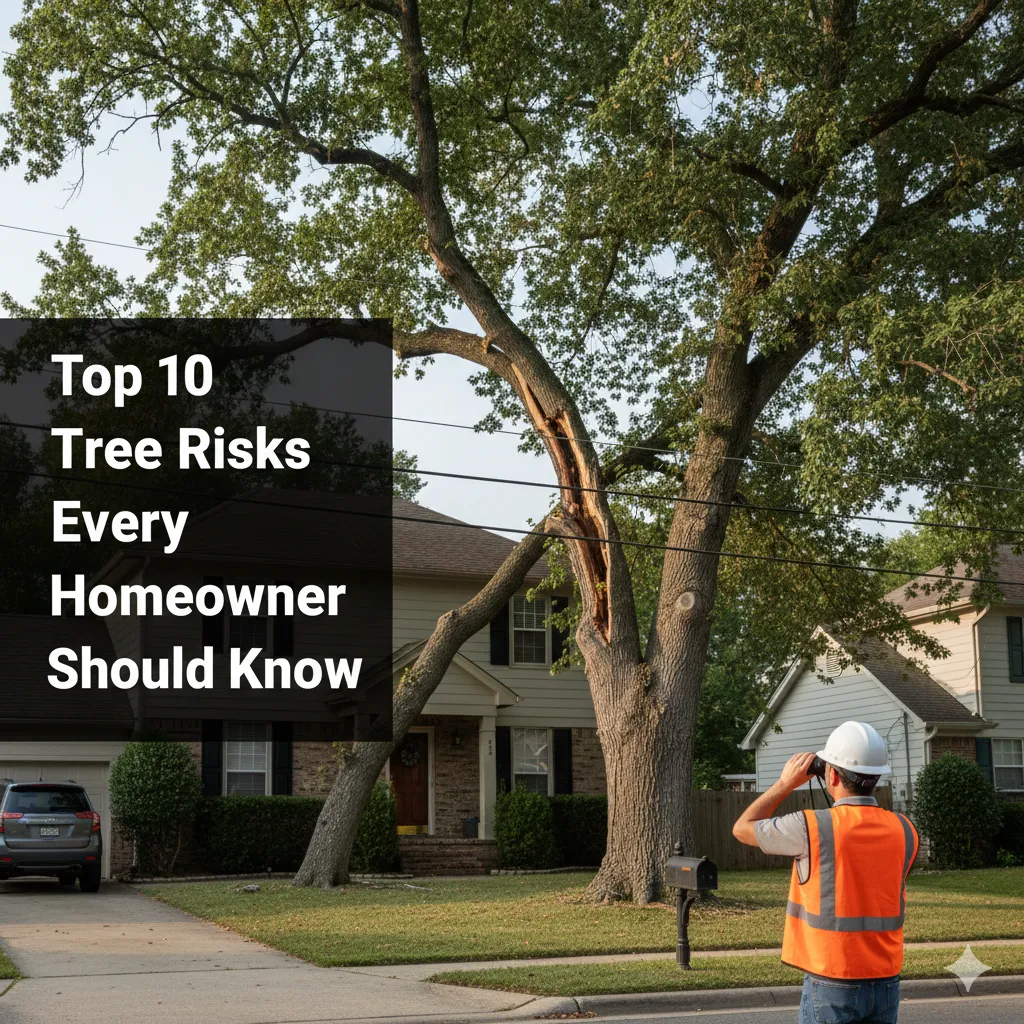
Trees add beauty, shade, and value to a home, but things can take a different turn altogether when overlooked. They can also pose serious dangers. Many tree risks for homeowners go unnoticed until damage has already occurred. From falling limbs to hidden root problems, unsafe trees can threaten your property, vehicles, and, most importantly, your family’s safety.
Understanding common tree hazards is essential for maintaining residential tree safety and avoiding costly repairs or emergency removals. With proactive planning, routine inspections, and professional tree care, most risks can be identified early and managed effectively.
Below are the top ten tree-related risks homeowners should know, along with guidance on prevention and when to seek help from a licensed tree removal service near Indiana.
Risk 1: Dead or Dying Trees
Dead or declining trees are among the most dangerous trees near house structures. Common warning signs include lack of leaves, peeling bark, visible fungus, hollow trunks, and brittle or falling branches.
Dead trees are structurally unstable and can fail without warning, especially during storms or high winds. Because of the immediate danger they pose, these trees should never be ignored. When signs of decline appear, contacting a licensed tree removal service near Indiana is the safest course of action.
Risk 2: Storm-Damaged Trees
Severe weather events such as windstorms, lightning strikes, ice, and heavy rain can weaken trees internally and externally. Even if damage isn’t visible, storms often compromise root systems and branch attachments.
Hidden storm damage significantly increases the risk of falling limbs or uprooting. Post-storm inspections are a critical part of home tree safety and help prevent delayed failures that could harm people or property.
Risk 3: Overhanging or Unbalanced Branches
Branches extending over roofs, driveways, patios, or power lines create serious hazards. Excessive weight on one side of a tree can lead to imbalance and sudden limb failure.
Routine pruning helps redistribute weight and reduce stress on the tree, making it an essential component of tree hazard prevention. Proper pruning also protects nearby structures from costly damage.
Risk 4: Trees Planted Too Close to the Home
Planting trees too close to buildings is a common homeowner mistake. As trees mature, their branches and roots expand, leading to roof abrasion, siding damage, clogged gutters, and limited airflow.
Close proximity increases tree risks for homeowners, particularly during storms when limbs can strike the house. Strategic placement and professional guidance can prevent long-term problems.
Risk 5: Root System Damage
Tree roots don’t just grow downward, they spread outward, often well beyond the canopy. Invasive roots can crack foundations, lift sidewalks, and damage underground utilities.
Signs of root issues include uneven pavement, soil heaving, and unexplained foundation cracks. Addressing root-related concerns early supports long-term residential tree safety and structural integrity.
Risk 6: Leaning Trees
A leaning tree may look harmless, but it can signal serious underlying issues. Causes include soil erosion, storm impact, root damage, or poor planting practices.
While some trees naturally lean, a sudden or worsening tilt is a red flag. A professional evaluation can determine whether corrective action or removal is necessary to maintain home tree safety.
Risk 7: Disease and Pest Infestations
Tree diseases and pests are common throughout Indiana and can silently weaken a tree’s structure. Infestations often reduce a tree’s ability to support its own weight, increasing the risk of failure.
Early detection is key to effective tree hazard prevention. Regular inspections by trained professionals can stop problems before they become dangerous or irreversible.
Risk 8: Weak Branch Unions and Poor Structure
Trees with V-shaped crotches or co-dominant stems are more prone to splitting. These weak unions are especially vulnerable during storms or under heavy snow and ice.
Structural pruning helps correct poor growth patterns early, improving strength and promoting residential tree safety as the tree matures.
Risk 9: Trees Near Power Lines
Trees growing near power lines present both electrical and fire hazards. Attempting to prune or remove these trees yourself is extremely dangerous and often illegal.
Only trained professionals with proper equipment should handle trees near utilities. This is one area where professional tree care is absolutely essential for safety and compliance.
Risk 10: Lack of Routine Tree Maintenance
Neglected trees are far more likely to become hazardous over time. Without regular inspections, pruning, and health assessments, small issues can escalate into emergencies.
Preventative maintenance is far more cost-effective than emergency removal and plays a vital role in tree hazard prevention and overall home tree safety.
How to Reduce Tree Risks on Your Property
Homeowners can take several proactive steps to reduce risk:
- Schedule annual tree inspections
- Address storm-related damage promptly
- Prune overhanging or weak branches
- Monitor signs of disease or decline
When concerns arise, don’t wait. Contacting a licensed tree removal service near Indiana ensures problems are handled safely and correctly.
Why Professional Tree Care Matters
DIY tree work is risky and often leads to injury or property damage. Trained arborists have the tools, experience, and insurance to manage trees safely.
Investing in professional tree care not only improves home tree safety, but also enhances curb appeal and increases property value over time.
Timber Pros Tree Service: Your One-stop Solution
Understanding and addressing tree risks for homeowners is essential for protecting your property and loved ones. From storm damage to poor maintenance, many tree hazards can be prevented with awareness and proactive care.
Don’t wait for an accident to happen. Take control of your residential tree safety today by scheduling a professional assessment with Timber Pros Tree Service and enjoy peace of mind knowing your property is protected.