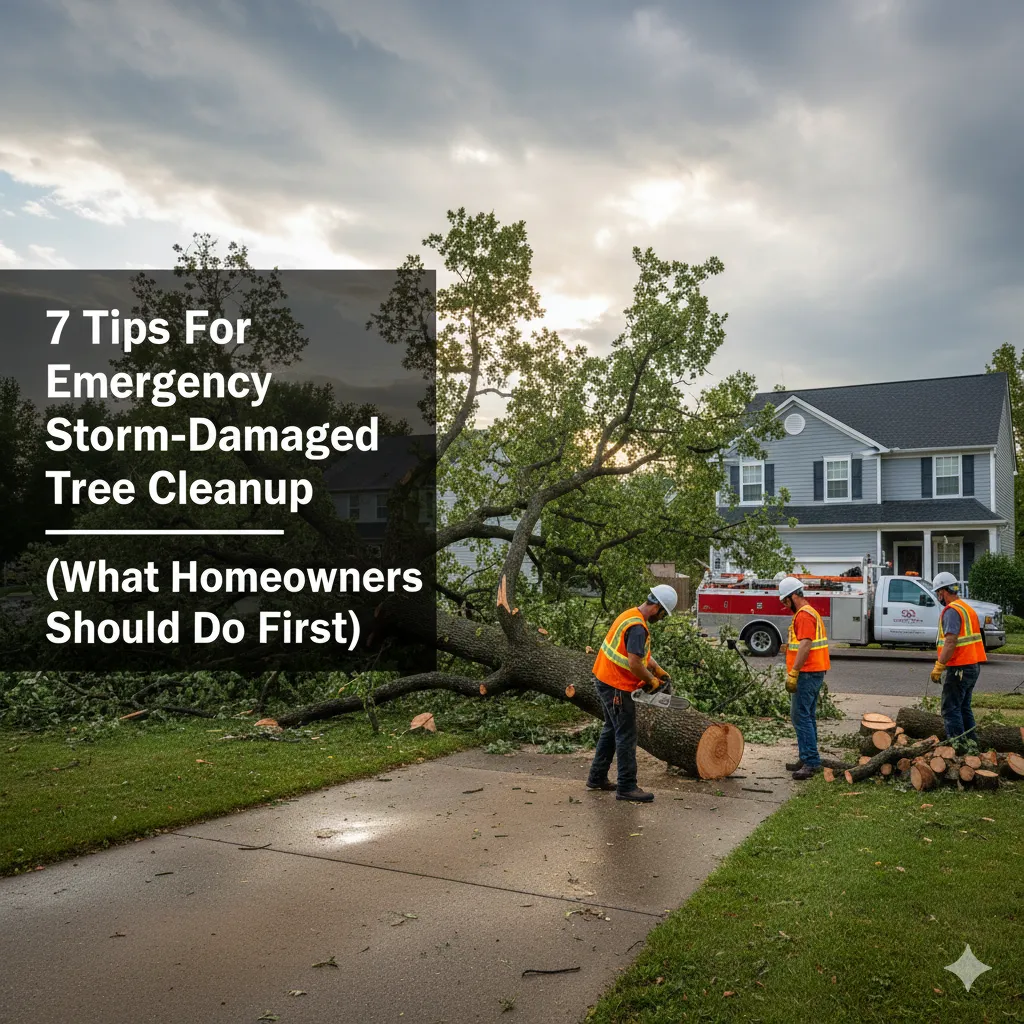
Standing in the yard after a storm is overwhelming. The broken limbs, a leaning tree, and the urgent questions crowding your mind:
· Is my family safe?
· Has the roof been compromised?
· Could a damaged tree bring down power lines or cause further structural damage?
These are real, immediate risks that demand prompt, careful action. This guide walks you through practical, safety-first steps for storm damage tree cleanup. It includes how to assess hazards, document damage for insurance, and decide when to call a licensed tree removal service.
FEMA’s storm-damage guides show just how quickly trees become a public-safety problem after severe wind events. That’s why we focus on reducing danger to people and property, preventing secondary damage, and helping you make choices that protect your home’s long-term value.
If you’re worried, that’s understandable but the right first moves now can prevent much larger problems later. Read this as a clear, calm plan to keep your family safe and get the cleanup started the right way.
Below are seven practical, safety-first tips you can use to tackle storm-damaged tree cleanup, plus a smart DIY vs. pro cheat-sheet so you think long-term, not short-term.
Tip #1: Triage The Yard: What To Fix First
After a storm the scene can feel chaotic as there are downed limbs, leaning trunks, and unclear priorities. Identify the things that pose immediate danger to people or structures first so you don’t waste time on cosmetic cleanup while hazards remain. Let’s dive into your priorities:
- Priority A: Trees leaning on homes, cars, or people; major limbs suspended over doors or living areas.
- Priority B: Trees blocking roads or driveways; large branches across walkways.
- Priority C: Small branches and scattered debris that affect landscaping only.
The USDA and extension services recommend community or homeowner triage after storms to quickly mark trees that pose immediate risk and those that can wait for repair.
Tip #2: Don’t DIY When Danger Is In The Equation
A busted branch on the lawn? Fine to remove carefully. A two-story oak leaning on the roof or tangled with power lines? That’s not a weekend project.
When to call a professional tree removal service near me:
- The tree is leaning into a structure or power lines.
- Major roots are pulled out of the ground (uprooted trees often snap unpredictably).
- The trunk is split, or large limbs are “hung up” and suspended.
Tip #3: Mark, Stabilize, and Communicate
A damaged yard without clear markings becomes hazardous for neighbors and arriving crews. You need to mark unsafe trees, keep a safe perimeter, and let responders or contractors know exactly which trees are at highest risk so work can be prioritized and controlled. Make sure to follow these steps:
- Mark hazardous trees and limbs with a bright tape so neighbors avoid danger.
- Use temporary bracing or support as unsecured fixes can worsen failures.
- Clear a working perimeter at least twice the height of the damaged tree.
- Inform neighbors and local authorities about downed limbs that affect shared roads.
- When in doubt, stand back, call a licensed storm damage tree cleanup service, and relay exact locations with GPS or landmarks.
Tip #4: DIY Vs. Professional – Quick Comparison
| Scenario | Safe DIY? | Call a licensed tree removal service |
| Small branches (<2 in.) on lawn | ✅ | — |
| Large branch suspended over roof | ❌ | ✅ |
| Tree leaning into power line | ❌ | ✅ (utility + line clearance crew) |
| Upright trunk, shallow limb damage | ✅ (prune) | Optional (arborist for long-term health) |
| Uprooted, root ball exposed | ❌ | ✅ |
When in doubt, pick safety. The modest cost of hiring a storm debris cleanup service is small compared to medical, structural, or electrical disaster risks.
Tip #5: What professionals do that you can’t (and why it matters)
All the licensed crews bring training, rigging gear, aerial lifts, proper PPE, and disposal plans. They also follow regulations for working near utilities and managing heavy timber. The reason why it matters is because what looks like “just cutting” often involves heavy rigging, aerial work, and utility coordination that require specialized gear and permits. Professionals manage worker safety, liability, proper disposal, and compliance, which protects your property and your wallet from surprise costs.
Tip #6: Save money, keep value: smart recovery steps
Rushed or improper removals can damage surrounding trees, roofs, and yards and reduce salvage value of usable wood. Smart recovery means documented estimates, salvage planning, and follow-up care, steps that preserve property value and reduce long-term expense. The recovery steps include:
- Ask the crew for an itemized estimate (removal, stump grinding, hauling).
- Salvage usable wood: ask your service if they can process salvageable logs.
- Plan follow-up care: pruning, wound care, and soil restoration improve the chance that partially damaged trees recover.
Tip #7: After Cleanup: Long-Term Prevention
If you skip prevention, the same weak limbs or poor species choices will fail in the next big wind event. Regular inspections, targeted pruning, and planning for wind-tolerant planting lower future risk and cut emergency cleanup needs over time. The long-term prevention steps include:
- Prune hazard limbs during calm seasons.
- Keep trees healthy with periodic inspections from a certified arborist.
- Work with municipalities or HOAs to trim street trees before storms. FEMA and local programs often support community pruning campaigns to reduce outages and hazards.
Final Words – Who To Call (And What To Say)
If you need safe, fast help after a storm, take the assistance of a licensed tree removal service with storm debris removal experience and proper insurance. When you call, be ready with:
- Address, photos, and a short description (tree leaning on…, branch across…, power line involved?).
- If anyone is injured or trapped (if so, call 911 first).
- If utilities are involved, whether the utility company has been notified.
At Timber Pros Tree Service, we handle emergency landscaping cleanup, storm debris cleanup service, and full tree removal; from safe de-energizing coordination with utilities to tree safety after a storm. We serve homeowners across Kokomo and the surrounding communities, such as Greentown, Logansport, Tipton, Peru, Galveston, Burlington, Flora, Zionsville, Carmel, Westfield, Kokomo, and nearby towns. If a tree’s putting a roof, car, or family at risk, call a licensed crew as it’s the smart, and safe move.
FAQs
How to clean up a fallen tree?
First secure the area, take a photograph to complain about damage for insurance, and then call your utility company if power lines are involved. However, for large trunks or hanging limbs, hire a licensed tree removal service.
What can I do during a natural disaster tree emergency in my area?
Call 911 for injuries, prioritize life and safety, get people clear of danger, and always notify utilities for downed lines. Then you need to document damage and request emergency storm debris cleanup from a professional crew.
How to help a damaged tree?
Remember not to paint or seal cuts, and water and mulch the root zone. For major splits, trunk cracks, or root damage, you need to have a certified arborist assess whether the tree can recover.